

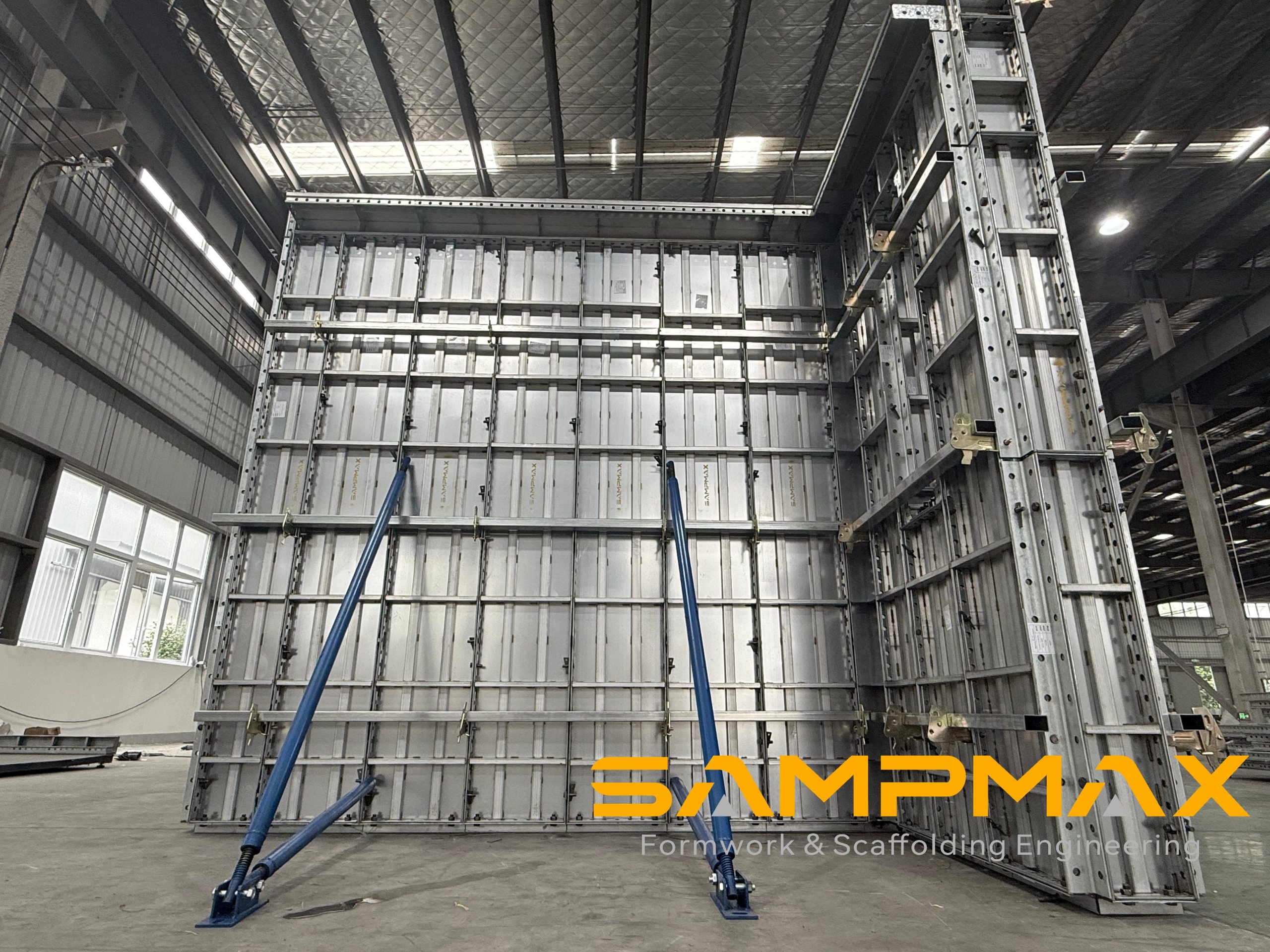

Construction in cold climates brings additional challenges to every stage of a project. For contractors working in Canada, Northern Europe, Russia, and other high-latitude regions, material selection can have a direct impact on construction efficiency, durability, and long-term cost.
This is especially important when choosing formwork. Plastic formwork has become popular for its lightweight design and easy handling.
However, when projects require repeated use under demanding site conditions, contractors may need to consider whether plastic is still the most suitable option.
In these situations, steel formwork can be a practical and highly durable alternative.
1. Why Does Cold Weather Matter?
Low temperatures affect more than concrete curing. Formwork is also exposed to cold temperatures, moisture, snow, freezing and thawing, and frequent handling on site.
•
•
For contractors, this means formwork selection should be considered together with the overall cold-weather construction strategy. A properly designed steel formwork system provides a rigid structure and stable panel dimensions, making it suitable for repeated use in demanding construction environments.
2. Steel vs. Plastic: What Should Contractors Consider?
The choice between steel and plastic should depend on the project. However, several factors can make steel more attractive for cold-climate construction:
1.
2.
3.
4.
3. Why Consider a Full Modular Steel Formwork System?
Choosing steel does not necessarily mean sacrificing flexibility. Modern steel formwork systems can use modular panels and accessories to create different wall configurations.
Contractors can combine panels, corners, connectors, and supporting components according to the requirements of the structure. This makes a modular steel system different from simply using heavy steel panels.
The goal is to combine steel’s rigidity and durability with the flexibility required on modern construction sites.
4. MEGA S: A Practical Steel Alternative
MEGA S Steel Formwork is designed for contractors looking for a reusable alternative to plastic formwork. The system uses modular steel panels that can be connected into different wall configurations. Corner elements, connectors, and supporting components work together to create a complete formwork system.
Key specifications and features of MEGA S include:
•
•
•
For contractors in cold regions, the key advantage is not simply that MEGA S is made from steel. It is the combination of rigidity, dimensional stability, modular configuration, and repeated reuse.
Conclusion: Choosing Formwork for the Conditions
There is no single formwork solution for every project. Plastic formwork can be a suitable choice for applications where lightweight handling and specific project requirements are the main priorities.
But when projects involve low temperatures, frequent handling, high reuse requirements, and demanding site conditions, contractors may find steel formwork a more suitable long-term option. For construction projects in Canada, Northern Europe, Russia, and other cold-climate markets, it is worth looking beyond the initial purchase price and considering the complete lifecycle of the formwork.
The right question is not simply:
“Which formwork is cheaper to buy?”
It is:
“Which formwork can deliver the best value throughout the project?”
For contractors considering a move from plastic to steel, MEGA S offers a practical starting point for that evaluation.