

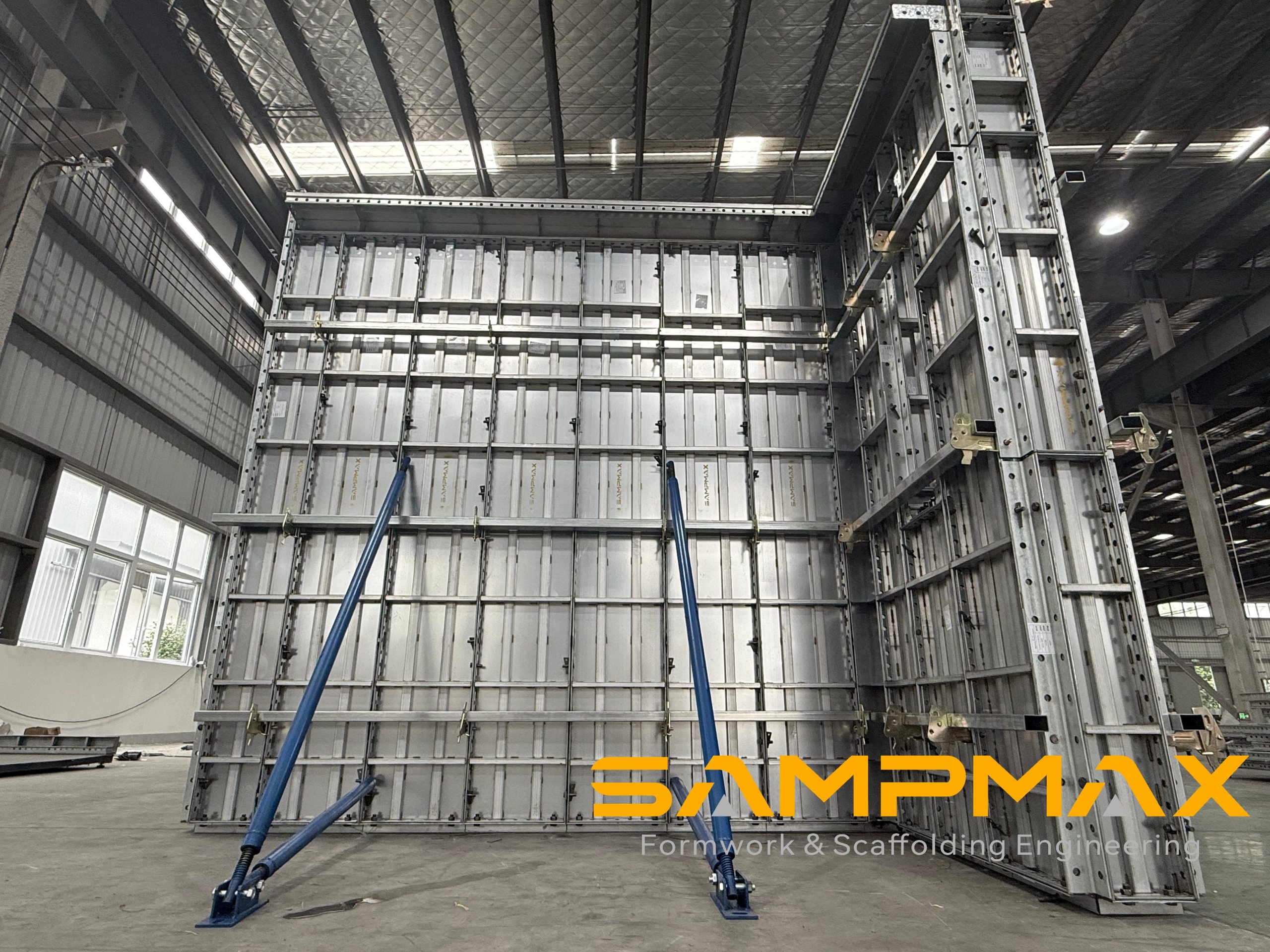

Choosing an aluminum formwork system is not simply a question of choosing between different materials. The way the system is constructed can have a direct impact on how it is used, maintained, and reused throughout a project.
Two approaches are commonly found in aluminum formwork: full aluminum formwork and aluminum frame formwork. Both are designed to provide the advantages of aluminum, including relatively low weight, repeatable assembly, and efficient handling.
However, their structural concepts are different, and those differences affect where each system creates the most value.
Understanding these differences is particularly important when evaluating formwork for high-rise construction, repetitive building layouts, or projects where equipment may need to be reused over a longer period.
1. Full Aluminum Formwork: Integration and Repeatability
Full aluminum formwork uses aluminum panels as the main forming components, with the aluminum panel providing both the structural frame and the concrete-contact surface.
One of its key strengths is system integration. The forming panel is designed as a complete component, with the frame, facing surface, connections, and accessories working together as one system.
This integrated approach can be highly effective when the same formwork configuration is used repeatedly. High-rise residential construction is a good example:
The relatively low weight of aluminum compared with traditional steel formwork can also make manual handling and repositioning practical in many applications.
2. Considerations for Full Aluminum Formwork
Full aluminum formwork also requires careful consideration of the project conditions.
Because the panel is an integrated component, modifications to the forming surface may involve the complete panel rather than an independent facing layer. Significant changes in wall dimensions, openings, slab layouts, or other structural details can therefore require additional components or modifications.
The initial investment can also be substantial, particularly when engineering and project-specific components are involved. However, this should be considered together with the expected number of reuse cycles. For a highly repetitive high-rise project, a larger initial investment can be justified by repeated use over many floors. For a project with limited repetition, the same investment may need to be evaluated differently.
In other words, the economic value of full aluminum formwork is closely linked to how intensively the system can be reused.
3. Aluminum Frame Formwork: Flexibility Through Separation
Aluminum frame formwork follows a different structural concept.
Instead of making the complete panel from aluminum, it combines a reusable aluminum frame with a separate forming surface. The aluminum frame provides the structural support, while the facing material forms the concrete surface. Separating these two functions allows the system to be managed differently during installation, maintenance, and refurbishment.
One of the main advantages is adaptability. Because the structural frame and forming surface are separate elements, the system can accommodate different panel configurations and facing solutions according to project requirements. This can be useful for contractors working across projects with different dimensions or construction conditions.
However, adaptability is only one part of the value proposition.
4. Repairability and Long-Term Reuse
The separation between frame and facing also creates an important maintenance advantage.
During repeated use, the concrete-contact surface is naturally exposed to wear and potential damage. With an aluminum frame formwork system, the facing can be repaired or replaced without necessarily replacing the structural aluminum frame.
Instead of treating the complete panel as a single asset, contractors can maintain individual components according to their condition. This can reduce unnecessary replacement, limit material waste, and help extend the useful life of the aluminum frame.
For contractors who use formwork across multiple projects, this can be particularly valuable. The structural frame can remain part of the equipment inventory while the forming surface is maintained or renewed according to the requirements of each application.
5. Comparing Cost: Initial Investment vs Lifecycle Value
Neither full aluminum formwork nor aluminum frame formwork should be judged by purchase price alone.
For full aluminum formwork, the economic advantage can come from high repetition. A system that is used across a large number of similar floors can distribute its initial investment over many construction cycles.
For aluminum frame formwork, the economic advantage can come from reuse, adaptability, and maintainability. The ability to repair or replace the forming surface independently can help reduce long-term replacement costs and extend the useful life of the structural frame.
The right comparison therefore includes:
The most cost-effective formwork system is not necessarily the one with the lowest purchase price. It is the one that makes the best use of the investment throughout its service life.
6. ALTA vs ALTUS: Two Aluminum Formwork Approaches
At Sampmax, ALTA and ALTUS represent two different approaches to aluminum formwork.
ALTA is a full aluminum formwork system, combining the forming surface and aluminum structure into an integrated panel. Its strengths include system integration, repeatability, consistent performance, and efficient reuse. For high-rise projects with standardized floor layouts, these characteristics can help maximize the value of repeated construction cycles.
ALTUS is an aluminum frame formwork system, using a reusable aluminum frame together with a separate forming surface. Its key advantages include adaptability, repairability, and the ability to maintain or replace the forming surface independently from the structural frame.
The difference is therefore not simply about which system is lighter, stronger, or cheaper. It is about how each system creates value:
Conclusion: Which Aluminum Formwork System Fits Your Project?
Before selecting an aluminum formwork system, contractors should consider the actual conditions of the project rather than relying on a single performance indicator.
How repetitive are the floor layouts? How many reuse cycles are expected? How stable is the building design? How will the forming surface be maintained? Can the system be reused on future projects?
For a highly repetitive high-rise project, full aluminum formwork can turn repeated construction cycles into significant economic value. For projects where adaptability, repairability, and long-term equipment utilization are more important, aluminum frame formwork can provide a practical alternative.
Both systems have a place in construction. The key is understanding the difference between an integrated aluminum formwork system and an aluminum frame formwork system, then matching that difference to the project’s construction strategy.
The right formwork is not simply the one with the lowest initial cost. It is the one that delivers the right balance of performance, reuse, flexibility, and lifecycle value for the project.