

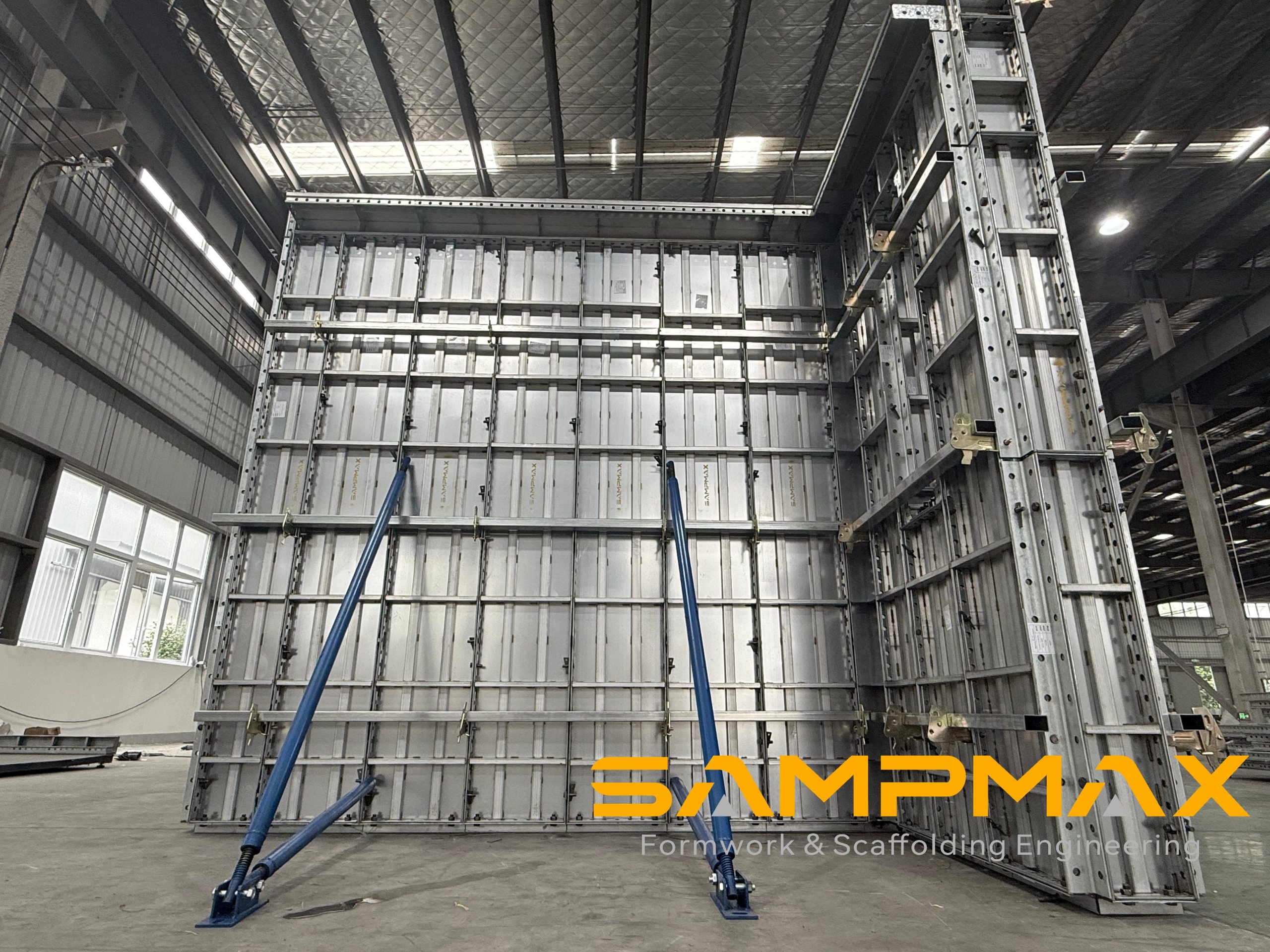

Foundation walls, basement structures, retaining walls, and other underground concrete structures face a different set of challenges from above-ground construction. In Northern Europe, Scandinavia, Canada, and other high-latitude regions, these challenges can be further intensified by wet ground conditions, snow, freezing temperatures, and seasonal changes.
For general contractors and formwork rental companies, selecting the right foundation formwork system means looking beyond the initial purchase price. The system needs to provide sufficient strength for concrete placement, withstand demanding site conditions, remain practical to handle, and deliver reliable performance over repeated use.
This is why both plastic formwork and steel formwork have an important role to play in foundation and underground concrete construction. Their different material properties allow contractors and rental companies to select a solution according to project scale, structural requirements, handling conditions, and expected reuse.
1. Why Does Underground Construction Require Different Formwork?
Underground construction creates several challenges that need to be considered before choosing a formwork system.
Foundation and basement walls are often constructed directly against wet soil, while fresh concrete generates significant pressure during pouring. At the same time, restricted access around excavated areas can make transportation and panel handling more difficult. In Northern regions, construction sites may also experience rain, snow, freezing temperatures, and repeated freeze-thaw cycles throughout the construction season.
An effective underground concrete formwork system needs to balance several key factors:
No single formwork material is ideal for every application. Instead, the choice should be based on what the project requires from the formwork.
2. Plastic or Steel Formwork: Which Approach Is Better?
For foundation and underground construction, plastic and steel represent two different approaches to solving the same basic problem.
Plastic formwork focuses on lightweight handling, moisture resistance, and operational flexibility. The panels can be easier to transport and manually position, which can be valuable on smaller sites or projects with limited access.
Steel formwork, meanwhile, focuses more strongly on structural rigidity, load capacity, durability, and repeated use. Steel panels are well suited to larger wall applications where concrete pressure and long-term equipment performance are major considerations.
For contractors, the decision often comes down to the balance between handling efficiency and structural performance. For rental companies, maintaining flexible equipment options can help a rental fleet serve a wider range of customer applications.
3. Moisture and Wet Ground Conditions
Moisture is one of the most common challenges in foundation construction. Underground formwork can be exposed to wet soil, rainwater, groundwater, snow, and melting ice. For equipment that is repeatedly moved between projects, these conditions can also increase maintenance requirements over time.
Plastic formwork has an inherent advantage in this environment because the material itself does not rust. Platox plastic formwork provides a lightweight solution for foundation walls, basement construction, and other concrete applications where easy handling and moisture resistance are important. Its lightweight construction can be particularly useful when panels need to be manually moved around excavated areas or when lifting equipment is limited.
Steel formwork takes a different approach. For projects requiring greater rigidity and a more robust panel system, steel can provide the structural performance needed for demanding concrete wall applications. MEGA S steel formwork combines a rigid steel panel structure with ZAM surface protection, providing a durable solution for repeated construction use.
4. Soil Pressure and Concrete Pressure
For foundation and basement walls, structural performance is one of the most important considerations. Although the formwork does not directly support soil after construction, it must withstand the pressure generated by fresh concrete during placement. Wall height, concrete density, pouring speed, and panel configuration can all influence the pressure acting on the formwork.
This is where steel formwork can become particularly valuable. MEGA S is designed for demanding concrete wall applications and provides a load-bearing capacity of up to 60 kN/m². Its rigid steel construction helps maintain panel stability during concrete placement and supports repeated use across different projects.
For contractors working on larger foundations, basement structures, retaining walls, or other structural concrete applications, this additional rigidity can be an important advantage. For smaller projects where extremely high load capacity is not required, the lighter handling characteristics of Platox may provide a more practical solution.
5. Working in Northern Conditions
In Northern Europe, Scandinavia, Canada, and other high-latitude markets, construction conditions can change significantly throughout the year. Snow, frozen ground, wet surfaces, and low temperatures can make material handling more difficult. Excavated foundation areas may also provide limited space for workers and equipment.
Under these conditions, formwork weight becomes an important practical consideration. A lightweight system can reduce the effort required to move panels around the site and may allow more operations to be completed without heavy lifting equipment. This makes Platox suitable for applications where mobility and manual handling are important.
For larger projects with mechanical lifting available, the heavier construction of steel panels becomes less of a limitation, while their rigidity and durability can provide greater value. The important consideration is therefore not whether a formwork system is “for cold weather,” but whether its handling and performance characteristics match the working conditions of the site.
6. Reuse and Long-Term Value
For general contractors, reusable formwork can reduce the amount of equipment required across repetitive construction operations. For rental companies, reuse becomes even more important.
A rental formwork system needs to survive transportation, assembly, stripping, cleaning, storage, and repeated deployment across different customer projects. Durability and ease of maintenance therefore directly affect the long-term value of the equipment.
Choosing the Right Foundation Formwork
There is no universal answer to the question of which formwork system is best for underground construction. The right choice depends on several factors: wall height, concrete pressure, moisture exposure, site accessibility, handling methods, expected reuse, and total operating cost.
For projects where lightweight handling, moisture resistance, and mobility are priorities, plastic formwork such as Platox can provide an efficient solution. For projects where rigidity, load capacity, durability, and repeated use are more important, steel formwork such as MEGA S can offer a stronger long-term option.
Sampmax offers both plastic and steel formwork solutions for foundation walls, basement structures, and underground concrete construction, helping contractors and rental companies select the right system for different project requirements.
The best formwork system is not necessarily the heaviest or the most expensive. It is the system that provides the right balance of strength, handling efficiency, durability, reuse, and overall project cost.
Unsure which system is right for your next winter project? Contact the Sampmax team today for a customized formwork analysis based on your site conditions and structural requirements.